IMO’S 2020 SULPHUR BUNKER CAP
by Gulcag Minic | Operator
TIME IS RUNNING OUT !!!
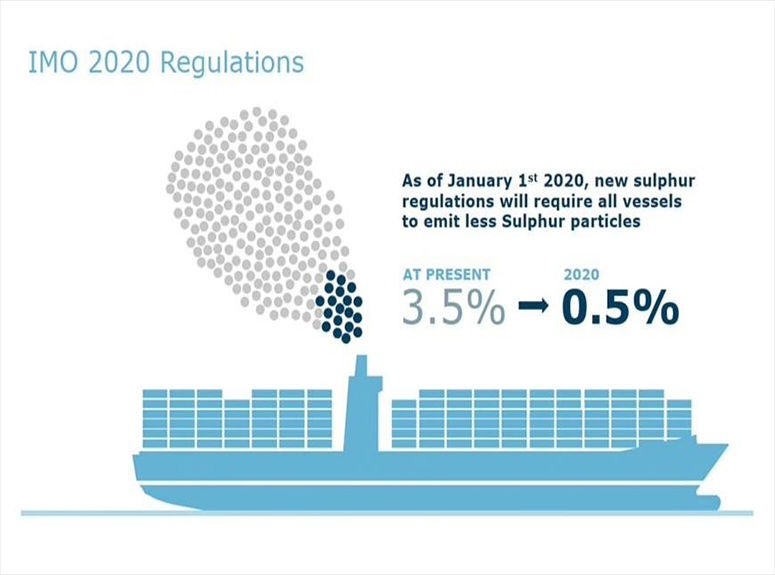
IMO has amended Regulation 14 of MARPOL Annex VI with effect from 1 January 2020. The amended Regulation 14 will result in a new global sulphur limit cap of 0.5% in HFO against the present 3.5% sulphur limit cap.
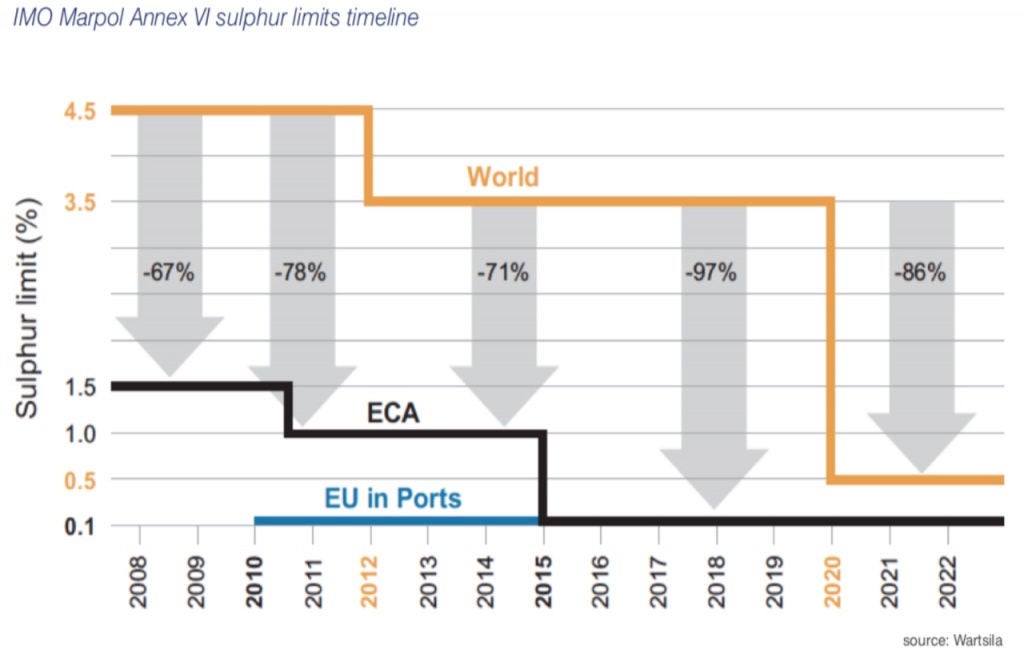
If we look back to see how these regulations have been developed, The IMO Marpol Annex VI ‘Prevention of Air Pollution from Ships’, first adopted in 1997 and came into force in 2005, has established limits on sulphur content in bunker fuel, as well as the creation of ECAs in designated sea areas setting stricter sulphur content limits at just 0.1%. Marpol Annex VI started with a global sulphur cap of 4.5% before it was lowered to 3.5% in 2012.
In 2008, the IMO adopted the revised standards, which saw the strengthening of the global sulphur limit to 3.5% in 2012, and now to 0.5% in 2020. A study submitted to IMO in 2016 identified that a delay of five years in the implementation of the 0.5% sulphur limit would contribute to more than 570,000 additional premature deaths compared to the implementation from 2020. In order to comply with this new regulation shipowners have following options with following possible financial/technical consequences:
- Consuming distillate fuels as per regulations (SOX= 0.5%) or MGO : Majority of owners seem to be planning to use the 0.5% lower sulphur fuel oil instead of high sulphur 3.5% residual fuel requiring a scrubber solution. But this option comes with 2 possible problems:
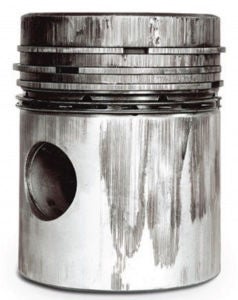
- Technical issues: Fuel pumps of marine engines are designed for a minimum viscosity. The viscosity of Marine Gas Oil is very low as compared to the pump design which leads to inadequate hydrodynamic lubrication, causing wear and scuffing. A change in fuel viscosity may cause an increase in fuel leakage between the pump plunger and barrel. The leakage can lead to hot start, and low fuel setting starts difficulties, especially in worn fuel pumps. Due to the low viscosity of the marine gas oil, the external and attached fuel pumps may not deliver the fuel at the required pressure, which will eventually hamper the designed power output of the engine.
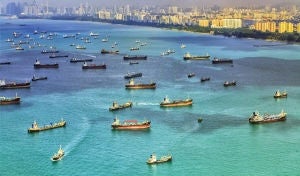
Assuming technical problems will be solved, fact remains that 0.5% fuel is a distillate, and this will lead to a squeeze on the global diesel market. Additionally, there simply won’t be enough heavy fuel upgrading units worldwide by 2020 in the global refinery system. Lead times for these refinery facilities are typically 3-5 years. And this will result in increased fuel prices and especially extended bunkering times for ships.
2. Installing scrubbers onboard: Ships may also meet the SOx emission requirements by using approved equivalent methods, such as exhaust gas cleaning systems or “scrubbers”, which “clean” the emissions before they are released into the atmosphere. Three main designs are available: open, closed and hybrid.
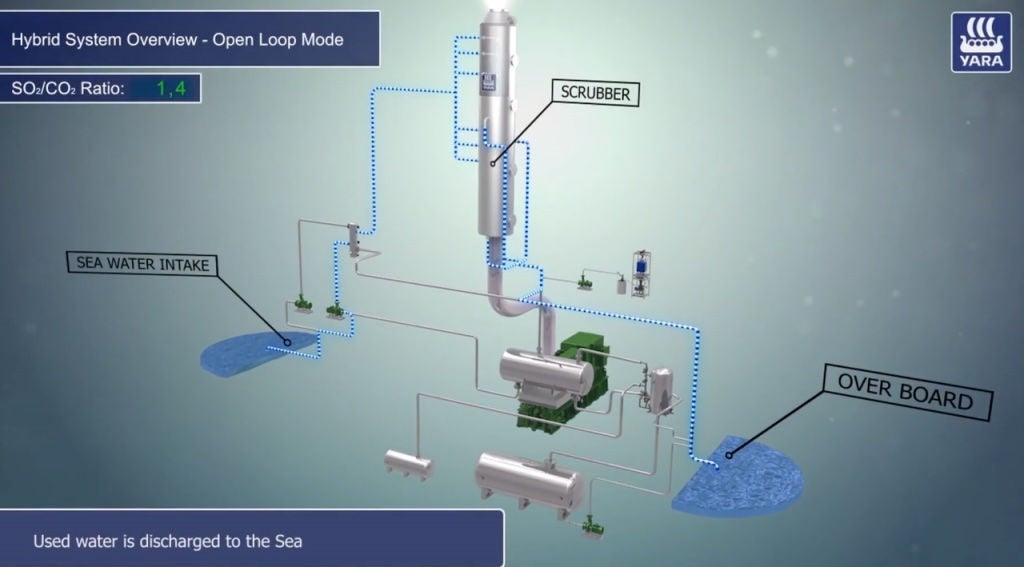
- Open loop scrubbers use and discharge seawater as part of the scrubber process and their use may be restricted in some waters. This means that a ship will need to carry a stock of compliant 0.5% fuel when the scrubber cannot be used. In this case, the equivalent arrangement must be approved by the ship’s Administration (the flag State).
- A closed loop scrubber works on similar principles to an open loop system but instead of using seawater it uses fresh water treated with chemicals (often sodium hydroxide) as a scrubbing medium. This converts the SOx into harmless sodium sulphate, which together with the wash water passes into a process tank where it is cleaned and recirculated. Fresh water is carried on board or is produced on board by a fresh water generator.
- A hybrid type scrubber combines both open and closed loop systems, which can be operated in open loop mode where seawater conditions and discharge regulations allow and in close loop mode at other times. The flexibility makes such hybrid systems popular among shipowners. Although scrubbers could be a solution for the 0.5% sulphur limit, there is the problem that the capacity of the shipyards is limited to about 1,500 vessels a year. If every one of the 50,000 merchant vessels are taken out of service and put into dry-dock, it is just not possible to install enough scrubber within remaining time. Banks may also not be so keen to lend the $3-5 million per vessel for the equipment to companies that are already under severe financial strain. Just to visualise the financial side of problem, let’s see a recent reported sale of two panamax vessels; MV P..DI.. (75,200 DWT, Jan 2001, Hyundai Samho) and MV P.. DA… (75,100 DWT, Jan 2001, Hyundai Samho) sold to undisclosed buyers for USD 7.20 mil each. So in order to install scrubbers on these vessels owners will need to consider a possible price tag of $3million plus time loss during installation, in other words about 50% of vessels’ purchase value.
- Using LNG or methanol as fuel onboard: An increasing number of ships are also using gas as a fuel as when ignited it leads to negligible sulphur oxide emissions. This has been recognized in the development by IMO of the International Code for Ships using Gases and other Low Flashpoint Fuels (the IGF Code), which was adopted in 2015. Another alternative fuel is methanol which is being
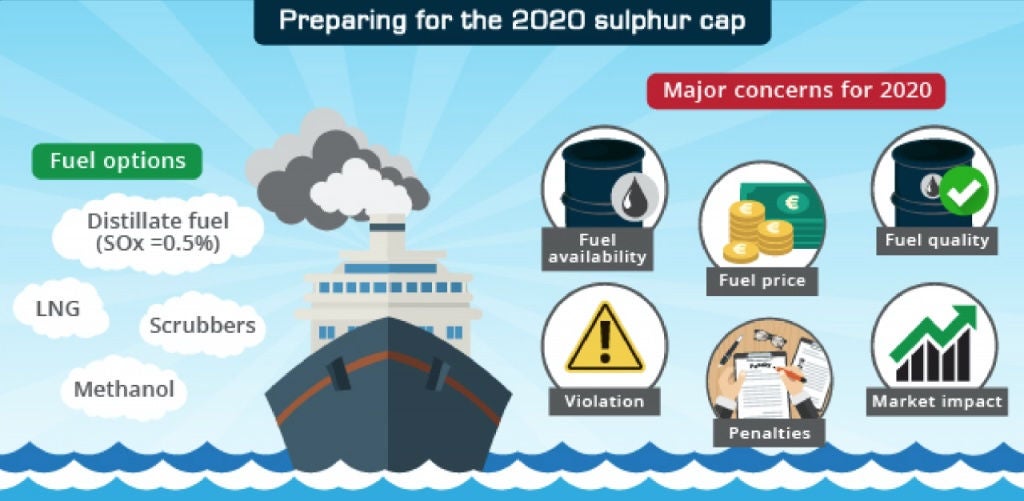
Despite the significance of the change, a surprisingly large proportion of shipping industry players seem to have poor or very poor awareness and understanding of the new regulation according to a survey conducted by global shipping consultancy Drewry. In Drewry’s view, the level of uncertainty today as to the total cost impact is so large that nobody is able to provide a confident forecast of the cost of compliance; the only certainty is that the extra cost will run into billions of dollars globally come 2020. Based on independent “futures” prices, low-sulphur marine fuel prices per tonne will be 55% higher than current high-sulphur fuels.
Considering the commercial operation side of the picture, voyage charterers are normally not much at risk for this new sulphur cap regulation, as they should not hold title to the bunkers. Time charterers generally hold title to the bunkers onboard, and the MARPOL amendment will have an effect on them as well as owners who fix on spot voyage. Under the T/C bunkers clause, charterers normally warrant to be in compliance with MARPOL and may also have given an indemnity to owners for costs, liabilities, fines etc. for breach of MARPOL compliance. From 1 January 2020, MARPOL fines levied on owners may presumably be sought from charterers under a T/C indemnity provision.
So, all responsible parties have to prepared to take necessary steps in order to prevent potential disputes. Developing a ship-specific implementation plan is necessary to prepare for 1 January 2020. Such a plan should cover at the least issues such as:
- Having a minimum quantity of 0.5% fuel on board by the end of December 2019
- Fuel management on board the ship – co-mingling, compatibility and separation
- Availability of compliant fuel
- Tank cleaning after switching to new fuels
- De-bunkering of non-compliant and residual fuel before the carriage ban (1 March 2020)
- Monitoring and logging emissions
- Charter party issues
Considering all these new changes in shipping industry, as True North Marine we are preparing and improving our services as well. Over the coming months we are releasing version 2.0 of our proprietary software, FleetView. With this new state-of-art software having more sophisticated algorithm in the route optimisation we are in all respect ready to help our customers for their vessels’ weather routing requirements in a best way possible during this transition period in which time, bunker & cost saving will be extremely important.
Fair winds and following seas , bon voyage ….