
Hainan Straits – Regulations and Considerations - tnmservices
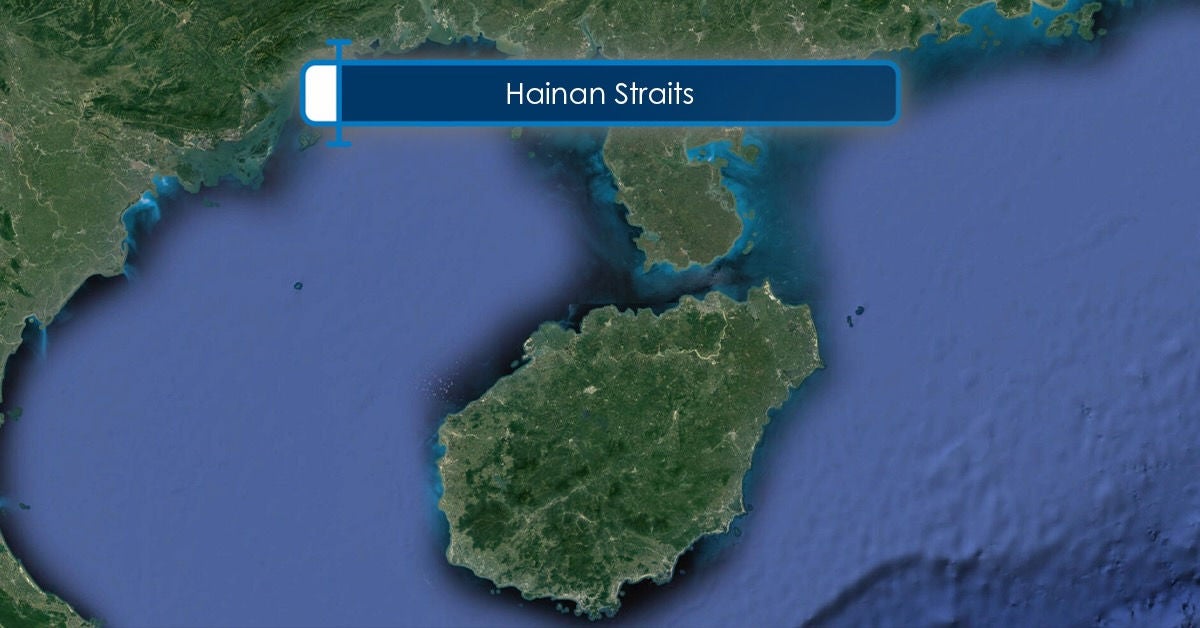
Connecting the Gulf of Tonkin/Beibu Gulf with the ports in Southern China and Taiwan Strait, the Hainan / Qiongzhou Strait (hereafter referred to as the Hainan strait) is one of the key maritime passages globally. Classified as part of China’s “Inland Waters” the straits are administered by the Qiongzhou Strait Administrative Office. In order to pass through the strait foreign-flagged vessels must abide by regulations including a limit on maximum sailing speed. Unless specific requirements (ex: deeper draft) warrant use of the more circuitous route south of Hainan island, in terms of distance, the Hainan Strait serves as the preferred route to optimize the voyage.
Detail of the Hainan strait with key surrounding ports indicated.
Given the straits position astride several key trade routes, a thorough understanding of the regulations governing passage is essential for shippers who intend to do business in the region.
Rules and Regulations for Passing through the Straits.
The rules for the passage of non-military vessels of foreign nationality (ie. Vessels registered in a flag state other China) through the Hainan strait are very stringent and failure to comply can have serious repercussions. Charterers and shipowners who choose to route their vessel via the straits must ensure they understand the rules for passage and properly prepare ahead of the vessel’s expected arrival.
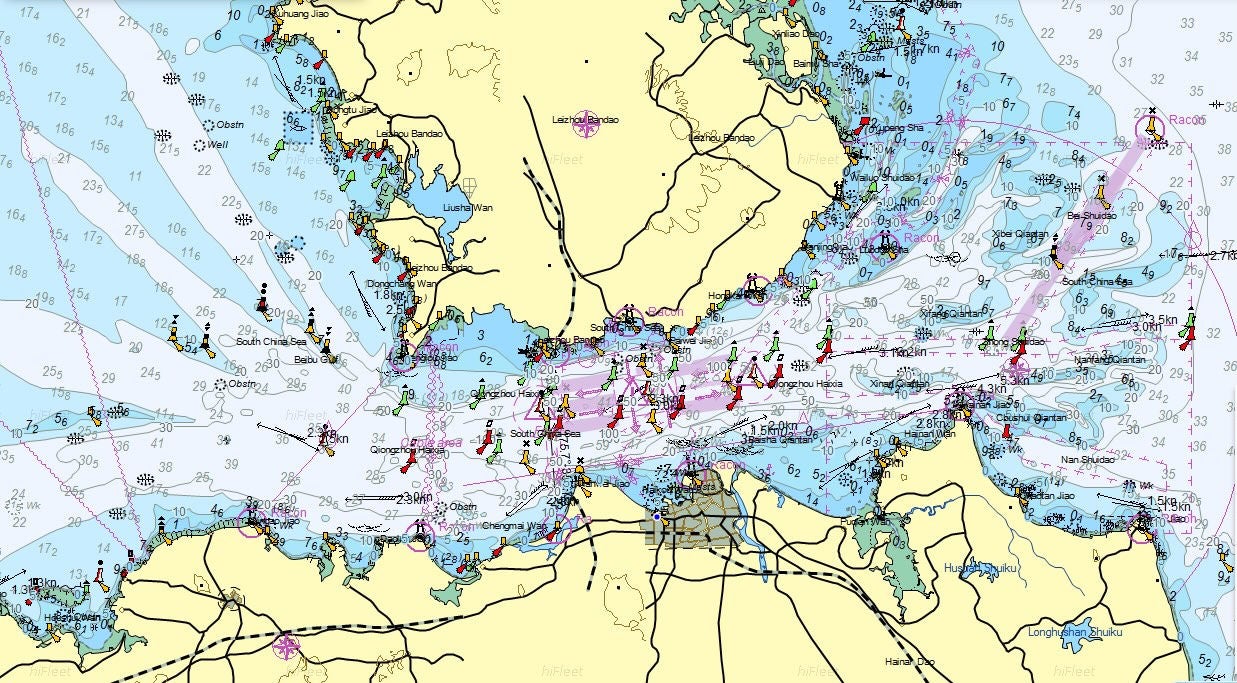
The area under the jurisdiction of the Qiongzhou Strait Administrative Office is delimited as:
Water area W of the line running south from (20* 09’ 37” N , 110* 41’ E ) to (20* 26’ 00”, 110* 31’ 22” E).
Water area E of the line running south from (20* 13’ 30” N, 110* 55’ 30” E) to ( 20* 00’ 20”N, 109* 42’ 06” E)
In order to transit the strait shippers must apply for passage with the Qiongzhou Strait Authority. In order to apply, the vessel must transmit their intentions and all other communications to The China Ocean Shipping Agency Haikou while fulfilling the following criteria:
- The vessel must apply for passage 48hrs before entering the defined region (see map above), OR prior to leaving port. See below a copy of the application for the information which must be provided:
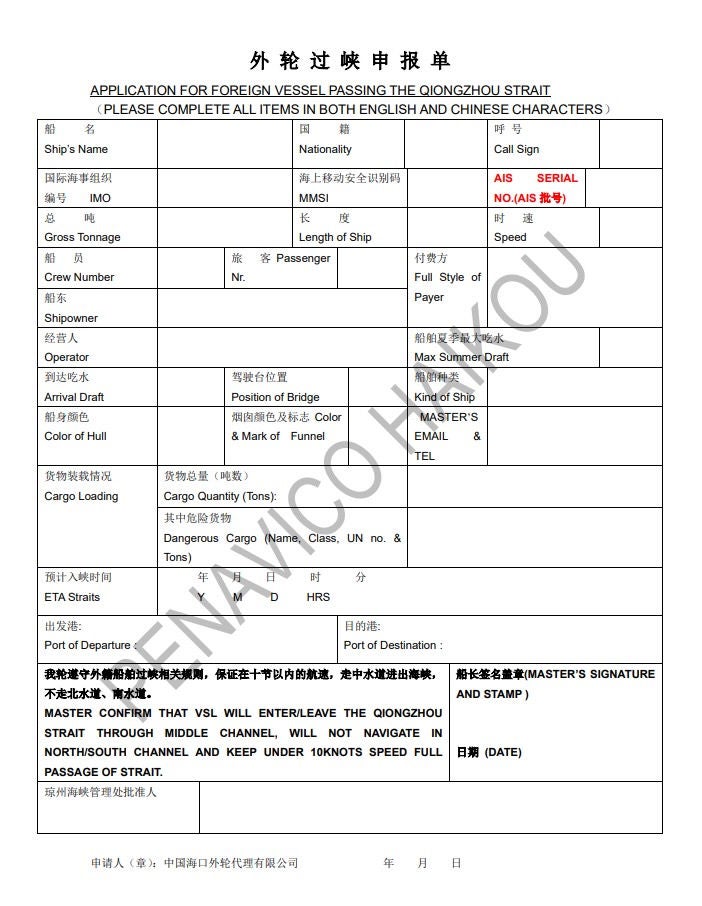
- After the vessel obtains permission to transit through the straits, they must advise the strait authority of their exact time and position of entry into the defined region 24 hours before their expected arrival OR within 2 hours of departure from port.
- After fulfilling the above requirements and obtaining permission, the vessel may sail through the strait BUT their speed must not exceed 10kts during their entry and passage through the defined region.
- Foreign vessels must keep to the center of the strait unless granted special permission to do otherwise.
- When entering and throughout the passage, foreign vessels are obliged to respond immediately to signals transmitted from shore or patrol ships and execute any demands from said signallers. Vessels which fail to comply may be held responsible for any resultant consequences.
- Vessels are not permitted to use radar during their passage. In the event that radar-use is necessary due to heavy fog or storm conditions, the vessel must make a request to the Qiongzhou Strait authority before activating radar. In an emergency the vessel is permitted to apply for permission and activate radar simultaneously but is obliged to proved a report afterwards.
- Those aboard vessel passing through the straits may not take any photographs or survey and must otherwise comply with the laws/decrees of the PRC
If a vessel fails to comply with any of the above rules there can be serious consequences; the vessel may be prevented from passing through the strait until they have completed the requisite application procedure or they may be ordered to proceed south of Hainan island. In either event delays are sure to result. If a vessel is already in the administrative region and is found to have violated any of the above regulations they may be detained for inspection/investigation in Haikou. This can result in penalties, and the vessel may be prevented from passing through the straits.
Considerations for passing through the Strait or S. of Hainan
Depending on the voyage undertaken, passing through the straits can reduce sailing distance significantly compared with sailing S. of Hainan. For example, a vessel sailing from a destination north of Hainan and west of Taiwan Banks (Qingdao, Ningbo, etc…), bound for a port in the upper part of Gulf of Tonkin (Fangcheng, Beihai, etc…) can realize savings of up to abt. 220nm by proceeding through the straits. Additionally, better weather conditions due to the sheltered waters in the strait can provide further benefits. Similarly, for a vessel approaching the GOT ports from the SE after passing through the Mindoro Strait, sailing through the Hainan Strait saves about 75nm compared to a route south of Hainan Island. Of course distance is not the only consideration when planning a vessel’s route. Operational concerns must also be considered; ultimately the decision about whether to proceed through the strait must be made on a case-by-case basis. A trusted and knowledgeable partner like True North Marine can assist charterers and owners with this decision by providing a case-specific analysis of each option taking into account the forecasted weather conditions.
A reliable weather routing partner can help you save money on fuel, avoid costly delays, and reach your emissions reduction goals. Contact True North Marine here to discuss weather routing solutions to suit your needs